Absolute Asia/North Korea/The Korean DMZ: A Forbidden Border Turned Wildlife Sanctuary
The Korean DMZ: A Forbidden Border Turned Wildlife Sanctuary
Once a tense border, the Korean DMZ has become a peaceful wildlife sanctuary – home to rare eagles, bears, and untouched forests thriving between two nations.
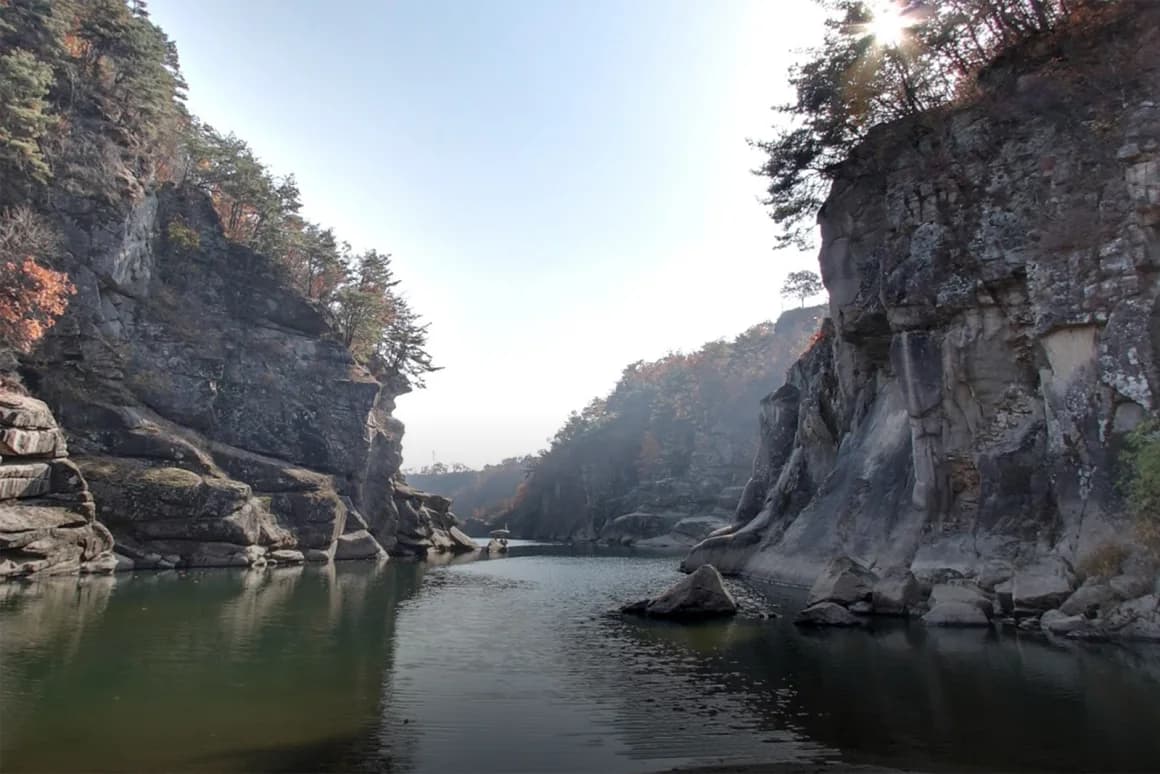
Quick Overview: Once a tense border, the Korean DMZ has become a peaceful wildlife sanctuary – home to rare eagles, bears, and untouched forests thriving between two nations.
The Korean Demilitarized Zone, or DMZ, is a strip across the Korean peninsula created by the armistice of 27 July 1953. It is one of the most heavily armed borders in the world, and it has also become an unplanned refuge for wildlife, because people have been kept out of most of it for decades. Korean Wikipedia gives its length as 248 kilometers, from the Imjin River estuary in Paju to Myeongho-ri in Goseong on the east coast.
| Created | 27 July 1953, by the Korean War armistice |
|---|---|
| Width | 2 km on each side of the military demarcation line, 4 km in all |
| Length | 248 km, marked by 1,292 signs |
| Wildlife near the DMZ | about 2,930 species of higher plants and vertebrates, around 30% of the peninsula’s total |
| Endangered species | 82 species, including cranes, the black-faced spoonbill, otter and goral |
| Han River estuary | designated a wetland protected area in 2006 |
Why wildlife thrived
Each army pulled back 2 kilometers from the military demarcation line in 1953, leaving a four-kilometer buffer that civilians rarely enter. The areas next to it hold important ecological zones, including well-vegetated areas, wetlands and habitats of rare plants. Korean Wikipedia counts about 2,930 species of higher plants and vertebrates living in the zone and its surroundings, around 30% of those found on the peninsula, with 82 endangered species among them. Cranes and white-naped cranes winter on the Cheorwon plain and the Imjin River, and endangered vultures and cranes winter in the Cheorwon area each year. The Han River estuary is the last natural estuary in South Korea.
Three ecological zones
- East and central mountains. The Hyangnobong area keeps near-primeval forest, and the top of Mount Daeam holds Yongneup, South Korea’s only high-altitude moor.
- Central inland. The volcanic Hantan River basin, the Cheorwon plain and Yeoncheon, where cranes and white-naped cranes spend the winter.
- West. The Han and Imjin estuaries, with large wetlands and tidal flats.
Seeing it
Access is tightly controlled and rules change. In Cheorwon, a DMZ Peace and Ecology Park opened in May 2016 with two walking courses, a 13-kilometer Sipjatap course and a 9-kilometer Saengchang-ri to Yongyangbo course. Check which areas are open and whether you must book through an operator. For the border itself, see our Korea DMZ tour page, and for Seoul see our Seoul page.
Sources (read in Korean, Korean Wikipedia): 비무장지대. Last checked November 2026.
Korean DMZ wildlife: FAQ
How long is the Korean DMZ?
248 kilometers, from the Imjin River estuary in Paju to Goseong on the east coast.
How wide is the Korean DMZ?
Four kilometers: two on each side of the military demarcation line.
How many species live in and around the DMZ?
About 2,930 species of higher plants and vertebrates, around 30% of the peninsula’s, including 82 endangered species.
Which birds winter near the DMZ?
Cranes, white-naped cranes and vultures winter around Cheorwon and the Imjin River.
Can you visit the DMZ for wildlife?
Some areas, such as the Cheorwon DMZ Peace and Ecology Park, have walking courses. Access is controlled, so check current rules.
Cranes and white-naped cranes winter on the Cheorwon plain and the Imjin River, and endangered vultures and cranes winter in the Cheorwon area each year.
Further Reading
Journeys That Go There