Absolute Asia/China/The Bund Shanghai: Night Views, River Reflections & Old Shanghai
The Bund Shanghai: Night Views, River Reflections & Old Shanghai
The Bund Shanghai feels most cinematic after rain, when ferry horns drift across the river and the skyline slowly disappears into low cloud above the Huangpu.
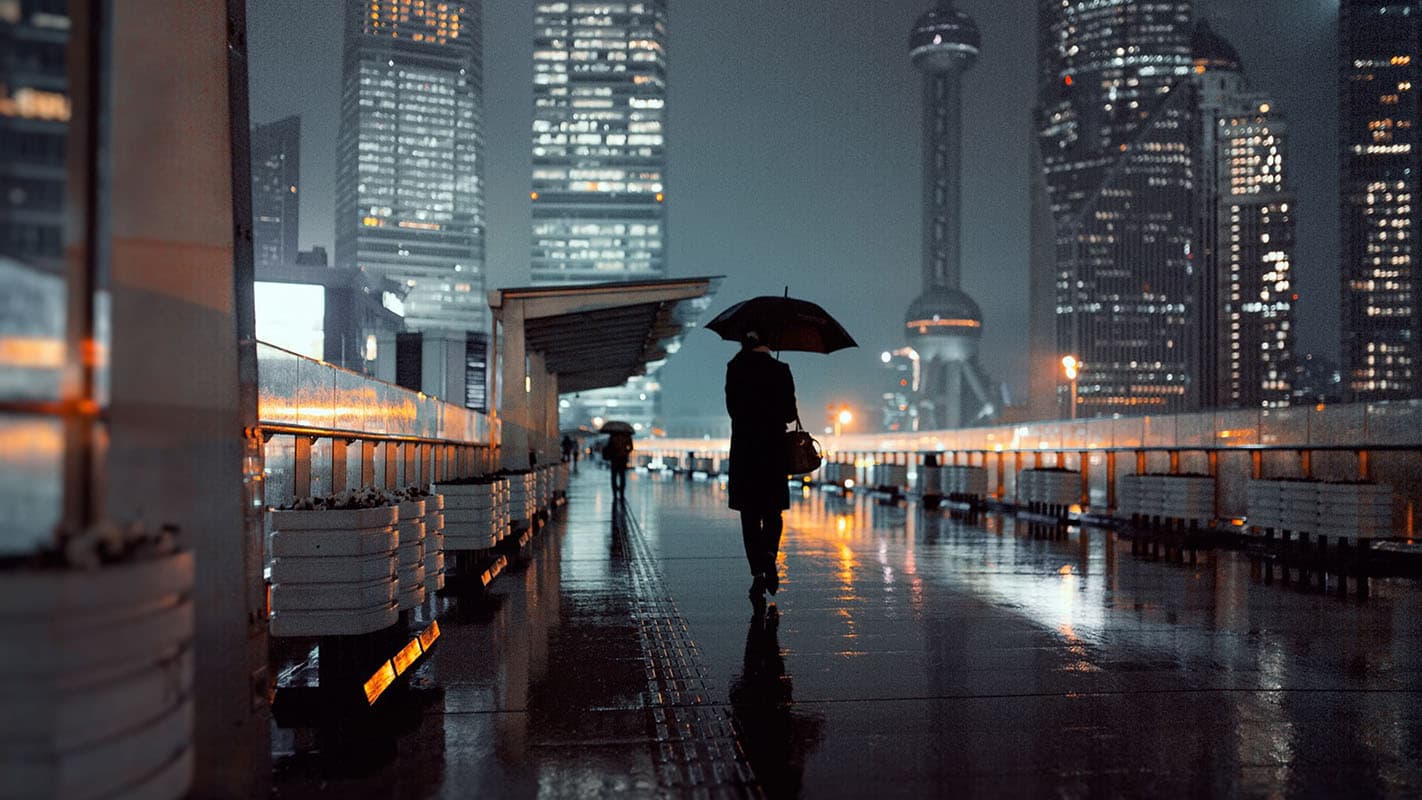
Quick Overview: The Bund Shanghai feels most cinematic after rain, when ferry horns drift across the river and the skyline slowly disappears into low cloud above the Huangpu.
The Bund is a 1.5-kilometer strip along the Huangpu River in central Shanghai, from Yan’an East Road in the south to the Waibaidu Bridge over Suzhou Creek in the north. More than twenty historic buildings in different styles line it, which is why it is called an exhibition of buildings from many nations. After Shanghai opened as a treaty port, it became the city’s financial and trading center.
| Length | 1.5 km, from Yan’an East Road to the Waibaidu Bridge |
|---|---|
| Buildings | more than twenty historic buildings in eclectic, Renaissance and early modern styles |
| British settlement | from 1844; the roadway was paved and the bank reinforced in 1848 |
| Name | Bund comes from a Hindi word for embankment |
| Firms | 61 foreign firms in 1864, 157 by 1875 |
| Firsts | gas street lighting 1865; Shanghai’s first telephone line 1883; first Chinese-owned bank 1897 |
How it grew
Before 1843 this was a mud flat on the Huangpu. From 1844 the northern stretch was part of the British settlement and used as a wharf, and the first foreign trading houses opened soon after: Jardine Matheson at No. 27, Dent & Co. at No. 14, Sassoon at No. 24 and Russell & Co. at No. 9. Consulates for Britain, France and Russia clustered here. The southern stretch fell within the French concession. The Commercial Bank of China, the first Chinese-owned bank, opened on the Bund in 1897, and in 1928 the central bank and other major banks moved here. By 1935 the Bund held about half of the paid-up capital of banks across China, according to Chinese Wikipedia.
The Peace Hotel was built as Sassoon House, and the National Government wanted a taller building beside it to show its own financial strength.
Planning your visit
Walk the Bund once by day for the buildings and once after dark for the view across the river to Pudong. It is free to walk and crowded at weekends and on public holidays, so go early or on a weekday. Our Shanghai guide and the French Concession page show how to combine it with the rest of the city.
Visiting with Absolute Asia Tours
Absolute Asia Tours has planned private trips in Asia since 1989. We arrange guides, transfers and timing for this stop as part of a longer China itinerary. We’re rated 4.8 out of 5 across about 900 traveler reviews. See our China tours or tell us your dates.
Sources (read in Chinese, Chinese Wikipedia): 外滩. Last checked November 2026.
The Bund: FAQ
How long is the Bund in Shanghai?
About 1.5 kilometers, from Yan’an East Road to the Waibaidu Bridge.
Why is it called the Bund?
The name comes from a Hindi word meaning an embankment.
When did the Bund become a financial center?
After Shanghai opened as a treaty port in the 1840s; by 1935 its banks held about half of China’s bank capital.
Which buildings are on the Bund?
More than twenty historic buildings, including the former Sassoon House, now the Peace Hotel.
When is the best time to visit the Bund?
Early in the day for fewer crowds, and after dark for the view of Pudong.
Planning your visit Walk the Bund once by day for the buildings and once after dark for the view across the river to Pudong.
Further Reading
Journeys That Go There