Absolute Asia/China/Terracotta Army Discovery & Mausoleum Experience
Terracotta Army Discovery & Mausoleum Experience
Discover the Terracotta Warriors near Xi’an: over 8,000 life-size clay soldiers, bronze weapons, and ancient secrets at Emperor Qin Shi Huang’s UNESCO World Heritage site.
Quick Overview: Discover the Terracotta Warriors near Xi’an: over 8,000 life-size clay soldiers, bronze weapons, and ancient secrets at Emperor Qin Shi Huang’s UNESCO World Heritage site.
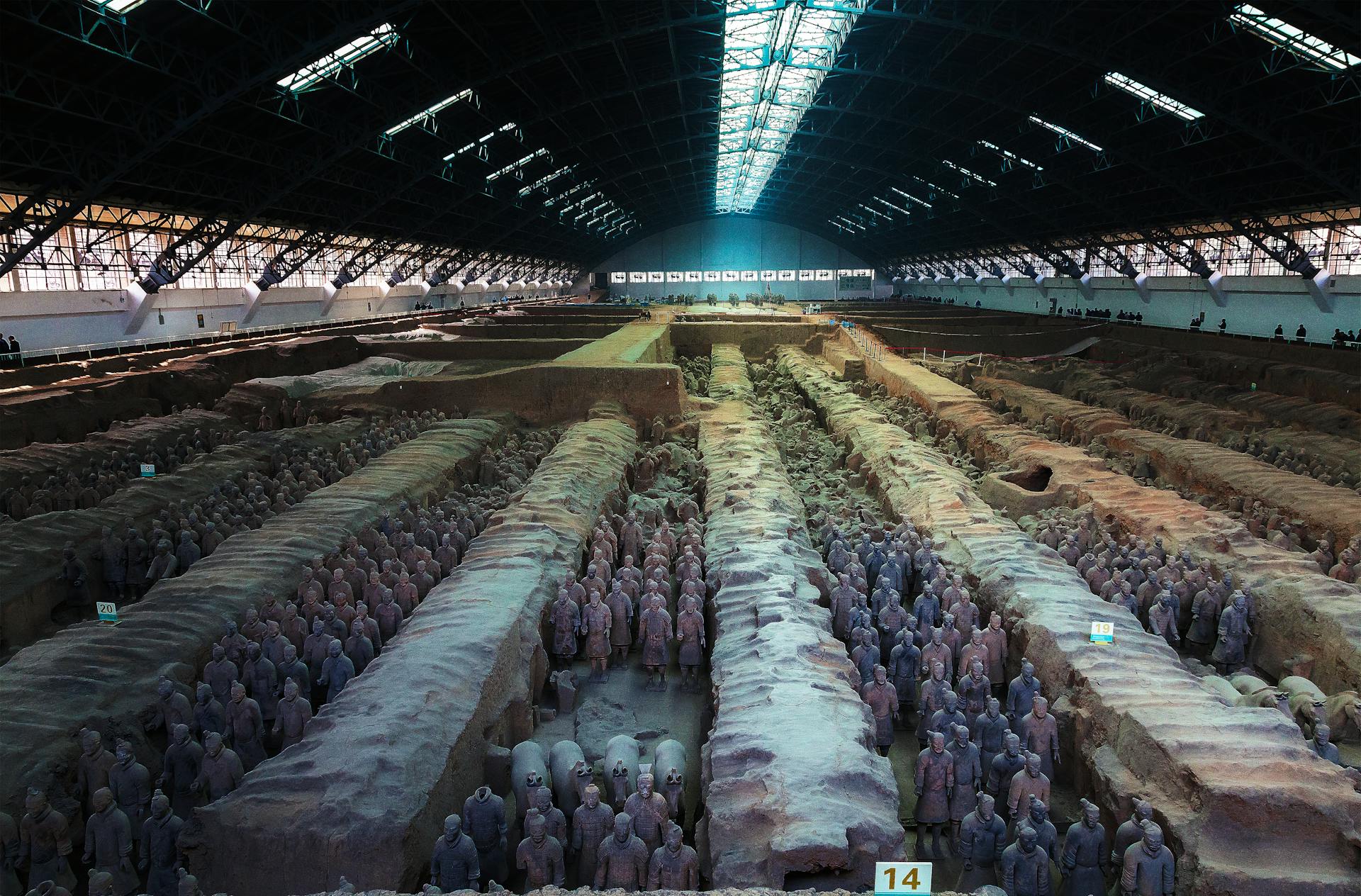
The Terracotta Army is a set of clay soldiers, chariots and horses found in pits east of the First Qin Emperor’s mausoleum in Lintong, near Xi’an. Villagers digging a well found fragments on 29 March 1974. The mausoleum became a World Heritage Site in 1987, and the museum opened to visitors on 1 October 1979.
| Found | 29 March 1974, by villagers digging a well during a drought |
|---|---|
| Museum opened | 1 October 1979 |
| Pits | Pits 1, 2 and 3 are excavated; the figures are close to life size |
| World Heritage | 1987 |
| Mausoleum | the whole complex covers about 50 km²; the central burial chamber has not been excavated |
| Mound | about 350 by 345 m and 76 m high |
What you will see
The three pits hold clay infantry, chariots and horses arranged in formations, with bronze weapons and other burial goods. The figures are close to life size, and their clothes, hair and equipment differ by rank and unit. When first uncovered the figures were brightly painted, but the color flaked away in minutes as it met the air. The army is only one of many burial pits in the First Emperor’s mausoleum, and the tomb mound nearby is much larger than any pit.
About the First Emperor
Qin Shi Huang unified China in 221 BC, and Chinese Wikipedia cites accounts that the tomb took many years and many laborers to build, with some historians saying up to 700,000 people worked on the project. Whether the central chamber contains mercury and other features described in old records has not been confirmed by excavation, although surveys found an unusual mercury level in the mound.
Planning your visit
The site is in Lintong district, outside Xi’an, and the museum has three pits and exhibition halls. Allow three hours, and see our Xi’an guide for how it fits with the city wall and the Muslim Quarter. We can arrange a guide who explains the pits and the tomb.
Visiting with Absolute Asia Tours
Absolute Asia Tours has planned private trips in Asia since 1989. We arrange guides, transfers and timing for this stop as part of a longer China itinerary. We’re rated 4.8 out of 5 across about 900 traveler reviews. See our China tours or tell us your dates.
Sources (read in Chinese, Chinese Wikipedia): 秦始皇兵马俑, 秦始皇陵. Last checked November 2026.
Terracotta Army: FAQ
When were the Terracotta Warriors found?
On 29 March 1974, by villagers digging a well.
Is the First Emperor’s tomb open?
No. The central burial chamber has not been actively excavated.
When did the museum open?
On 1 October 1979.
Is the site a World Heritage Site?
Yes, since 1987.
How long does a visit take?
About three hours.
Whether the central chamber contains mercury and other features described in old records has not been confirmed by excavation, although surveys found an unusual mercury level in the mound.
Further Reading
Journeys That Go There