Absolute Asia/China/French Concession Shanghai: Timeless Streets & Old Shanghai
French Concession Shanghai: Timeless Streets & Old Shanghai
Discover the quieter side of Shanghai through rain-soaked streets, hidden cafés, historic villas and the timeless atmosphere of the French Concession.
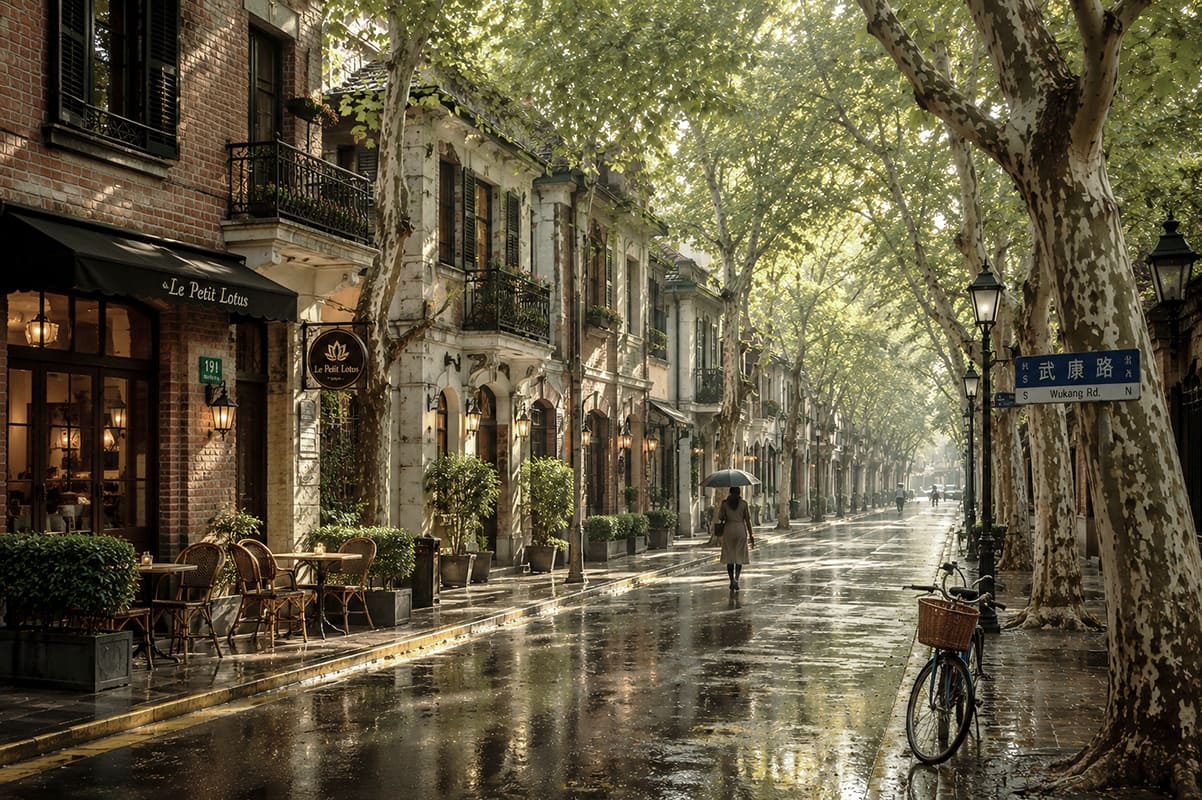
Quick Overview: Discover the quieter side of Shanghai through rain-soaked streets, hidden cafés, historic villas and the timeless atmosphere of the French Concession.
The former French Concession covers roughly the old Luwan and Xuhui districts of Shanghai, and a narrow strip to the east reached into Huangpu. It was the earliest, largest and most prosperous of China’s four French concessions, and it is now the Hengshan–Fuxing Road historic district, known for tree-lined streets, villas and lane houses.
| Opened | 6 April 1849, when notes were exchanged between the Shanghai intendant and the French consul; about 986 mu |
|---|---|
| Expansions | 2,135 mu in 1899; a 1914 agreement raised the area under French control to about 15 times the original |
| Housing | a leading residential area by the 1920s, with apartments and shikumen lane houses |
| End of the concession | France handed over its rights in 1943 |
| Today | the Hengshan–Fuxing Road historic and cultural district |
History
The French consul Montigny agreed with the Shanghai intendant on 6 April 1849 to set out a concession of about 986 mu outside the British area. It expanded in 1899 to 2,135 mu, and French authorities built roads beyond its boundary from the 1860s, first from the west gate of the county town to Xujiahui. A 1913 to 1914 agreement gave the concession police and tax powers over the extra-boundary road area, raising the territory it controlled to about 15 times its original size. By the 1920s it was Shanghai’s leading residential district, with many apartment buildings and shikumen houses for a growing number of Chinese residents. White Russians who arrived after the Russian Revolution helped build a lively commercial quarter. The French gave up their concession in 1943 under German pressure.
What it is like now
Chinese Wikipedia notes that the former concession area remains a distinctive district and a popular destination despite redevelopment, and that it was a center of Catholic life in China. We have not verified opening hours or entry rules for individual buildings here, so check the ones you plan to visit.
Planning your visit
The district is best explored on foot in half a day, ideally in spring or autumn, and it pairs with the Bund and Yu Garden in a Shanghai day. See our Shanghai guide.
Visiting with Absolute Asia Tours
Absolute Asia Tours has planned private trips in Asia since 1989. We arrange guides, transfers and timing for this stop as part of a longer China itinerary. We’re rated 4.8 out of 5 across about 900 traveler reviews. See our China tours or tell us your dates.
Sources (read in Chinese, Chinese Wikipedia): 上海法租界. Last checked November 2026.
French Concession: FAQ
When was the French Concession established?
In 1849, on 6 April, when notes were exchanged setting out about 986 mu.
When did the French Concession end?
France handed over its rights in 1943.
What is the French Concession like today?
A historic district of tree-lined streets, villas and lane houses, now the Hengshan–Fuxing Road area.
How long does a visit take?
About half a day on foot.
Where is it?
Roughly in the former Luwan and Xuhui districts of Shanghai.
We have not verified opening hours or entry rules for individual buildings here, so check the ones you plan to visit.
Further Reading
Journeys That Go There