Absolute Asia/China/Forbidden City Beijing: Behind the Walls of Imperial China
Forbidden City Beijing: Behind the Walls of Imperial China
Behind enormous red walls, Forbidden City Beijing reveals centuries of imperial history through vast courtyards, ceremonial halls and quieter hidden gardens.
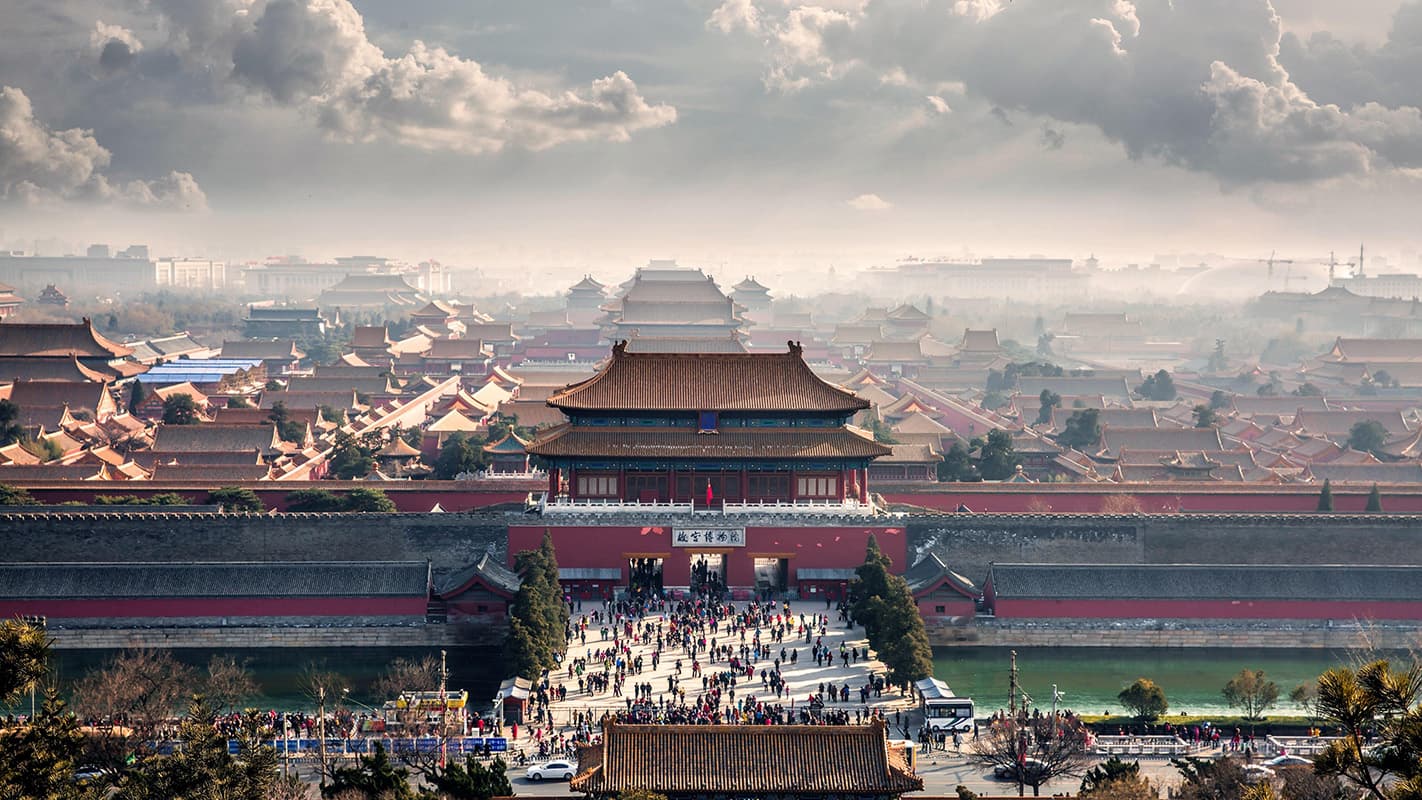
Quick Overview: Behind enormous red walls, Forbidden City Beijing reveals centuries of imperial history through vast courtyards, ceremonial halls and quieter hidden gardens.
The Forbidden City, now the Palace Museum, was the imperial palace of 24 Ming and Qing emperors at the center of Beijing’s central axis. Work began in 1406 under the Yongle emperor and finished in 1420. It is the largest and most complete palace complex still standing in the world, and a UNESCO World Heritage Site since 1987.
| Built | begun 1406, completed 1420, modeled on the Nanjing palace |
|---|---|
| Size | about 720,000 m² of ground; about 150,000 m² of buildings; over 70 palaces and about 9,000 bays |
| Layout | 961 m north to south, 753 m east to west; 10 m wall; moat about 59 m wide |
| Gates | Meridian Gate south, Gate of Divine Prowess north, East and West Glorious Gates |
| World Heritage | 1987; also part of the Beijing Central Axis listing of 27 July 2024 |
| Fires | the main halls burned in 1421, 1557 and 1597 and were rebuilt |
How it is laid out
The palace splits into the Outer Court and the Inner Court. The Outer Court is centered on the three great halls, Taihe, Zhonghe and Baohe, where state ceremonies took place. The Inner Court holds the Palace of Heavenly Purity, the Hall of Union and the Palace of Earthly Tranquility, the emperor’s and empress’s residences, followed by the Imperial Garden and the six eastern and six western palaces where consorts lived. Four corner towers stand at the angles of the wall, and Chinese folk sayings count nine beams, eighteen pillars and 72 ridges in each, to describe their complexity.
A short history
Yongle moved the capital from Nanjing to Beijing, and the palace was built on the foundation of the Yuan capital. Chief builders included Chen Gui and Wu Zhong. Lightning struck in 1421, and fires destroyed the front halls in 1557 and again in 1597, with rebuilding finished in 1627. Li Zicheng’s army took Beijing in 1644, and the Qing took over the palace afterward. Its collection, mostly of Ming and Qing court objects, forms the Palace Museum.
Planning your visit
Walk the central axis from the Meridian Gate north to the Gate of Divine Prowess, then continue to Jingshan Park for a view back over the roofs. Allow half a day; much of the route is open courtyard with little shade. Tickets and entry rules change, so check the Palace Museum’s official site before you plan, and book ahead for peak months. Our guide to Beijing shows how it fits with the other sights.
Visiting with Absolute Asia Tours
Absolute Asia Tours has planned private trips in Asia since 1989. We arrange guides, transfers and timing for this stop as part of a longer China itinerary. We’re rated 4.8 out of 5 across about 900 traveler reviews. See our China tours or tell us your dates.
Sources (read in Chinese, Chinese Wikipedia): 故宫. Last checked November 2026.
Forbidden City: FAQ
When was the Forbidden City built?
From 1406 to 1420, under the Yongle emperor.
How big is the Forbidden City?
About 720,000 square meters, 961 meters north to south and 753 meters east to west.
Is the Forbidden City a World Heritage Site?
Yes, since 1987.
How long does a visit take?
Allow about half a day.
Who lived in the Forbidden City?
Twenty-four Ming and Qing emperors and their courts.
Lightning struck in 1421, and fires destroyed the front halls in 1557 and again in 1597, with rebuilding finished in 1627.
Further Reading
Journeys That Go There