Absolute Asia/Destinations/Japan/Places to Visit/Nara City Guide: The Great Buddha, Nara Park Deer and a Day Trip Plan (2026)
Private & Tailor-Made Japan Tours
Japan's first great capital, with a deer park at its center
The Essence of Nara City Guide
Nara was the capital from 710 to 784. Todai-ji's Great Buddha, Kasuga Taisha and about 1,300 deer in Nara Park sit within an easy walk of each other.
Nara was Japan’s capital for 74 years, from 710 to 784, and it still feels like a place built on a grand scale: a Buddha hall that dwarfs the people inside it, a park with no gates, and wild deer that walk through town as if they owned it. It’s also close enough to Kyoto and Osaka for a day trip, and rewarding enough that many travelers wish they’d stayed longer.
A short history of Nara
The court moved to Heijo-kyo, today’s Nara, in 710 and stayed until 784, when it moved to Nagaoka-kyo. The big Buddhist temples stayed behind, which is why Nara kept its character as a temple city long after the emperors left. Because Nara was not hit by large-scale air raids in the war, many of its old buildings and neighborhoods survived. In 1998 UNESCO listed the Historic Monuments of Ancient Nara as a World Heritage Site.
What to see in Nara
Todai-ji and the Great Buddha
Todai-ji is the reason most people come. Its central image, the Great Buddha (Daibutsu), stands about 14.7 meters tall. It was consecrated in 752, and the hall that houses it was finished in 758. That hall burned in the Middle Ages, and the one you see today was rebuilt in 1709 on a smaller scale than the original, which is still among the largest wooden buildings in the world. The Great Buddha has also been repaired many times, and only parts of the lotus pedestal date from the original.
Nara Park and the deer
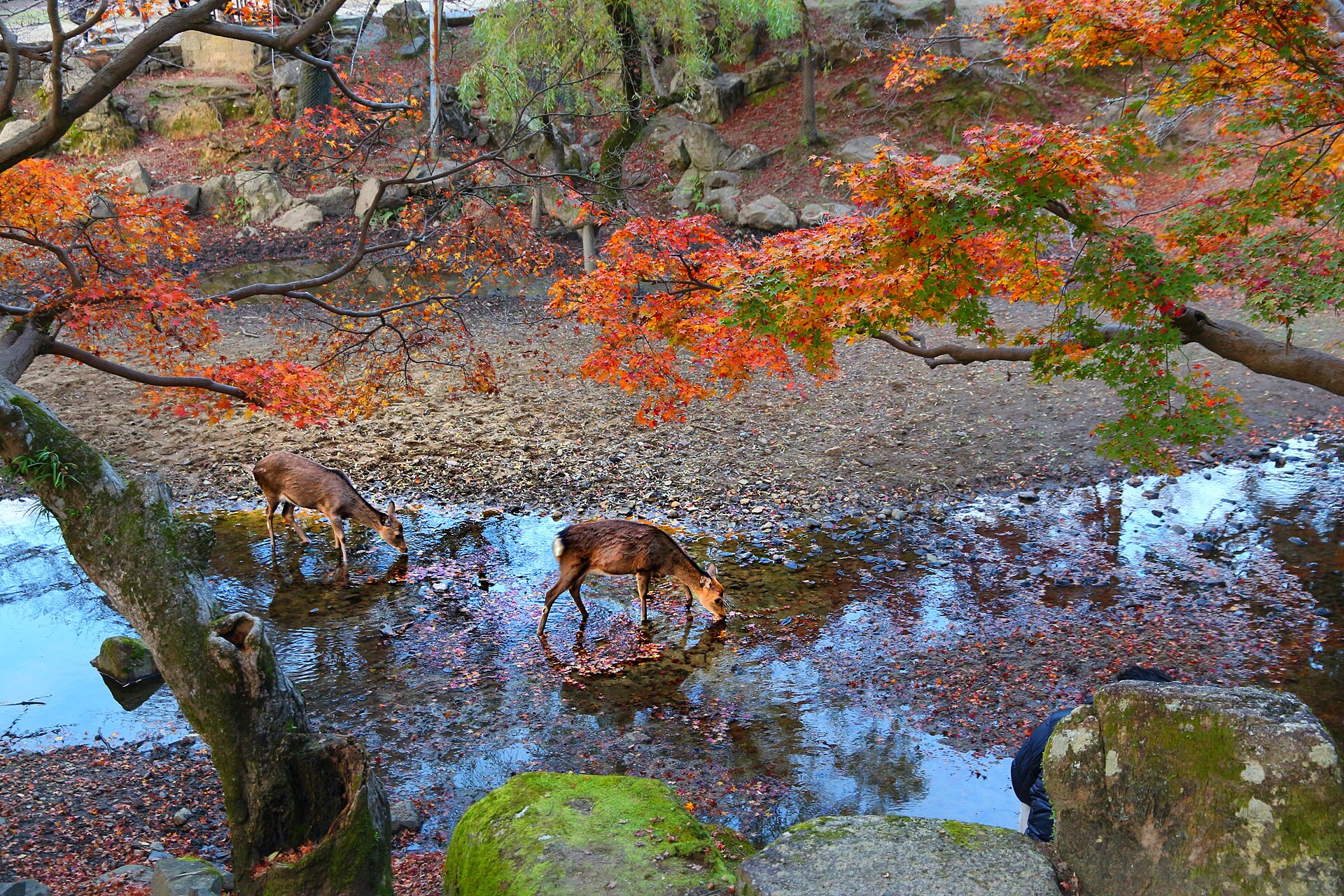
Nara Park opened in 1880 and covers about 502 hectares, or about 660 if you count the temples around it. There are no walls, fences or gates, no admission fee, and it’s open at any hour. Around 1,300 deer live in and around the park. They’re designated a national natural monument, and they’ve been treated as messengers of the Kasuga shrine for more than a thousand years.
The deer are wild animals, not pets. They’re used to people and they will nudge, nibble and bow for the special crackers sold by vendors in the park, but they can also bite or butt, especially in the autumn rut and around fawns. Feed them only the crackers sold for the purpose, keep paper and plastic bags out of reach, and don’t tease them. A long-running story says the deer learned to bow from the Fujiwara nobles who bowed to them as messengers of the gods.
Kasuga Taisha and Kofuku-ji
The Kasuga shrine, founded in 767, is the Fujiwara clan’s shrine and sits at the edge of a primeval forest that has been protected for centuries. Kofuku-ji, the Fujiwara family temple, stands near the park’s western edge and was once one of the most powerful institutions in the region.
Naramachi
South of the park, Naramachi is a former merchant district with narrow lanes and wooden townhouses from the Edo period. It’s a good place for a late lunch and a quieter walk once the park crowds thin out.
When to go
Nara is mild: the average annual temperature is 15.7 °C, with about 1,365 mm of rain a year and very little snow. Spring is the cherry blossom season, and the Ukimido pavilion on the pond near the park is a popular blossom spot. Autumn brings red maples in the park. Events include the Shuni-e rites at Todai-ji in March, the Shosoin treasure exhibition in autumn, and the Kasuga Wakamiya On-matsuri festival. Check the dates for the year you go.
Getting there and how long to stay
Nara is under an hour by train from both Kyoto and Osaka, via the Kintetsu or JR lines, so a day trip works well. The park and Todai-ji, Kasuga Taisha and Kofuku-ji are all within a long walk of each other. Stay a night if you’d like to see the park early or late, when the day-trip crowds have gone, or if you plan to add Horyu-ji or the Yamanobe-no-michi walking path. See our guides to Kyoto and Osaka, and our Japan tour packages for routes that combine the three.
Planning Nara with Absolute Asia Tours
Absolute Asia Tours has planned private trips in Asia since 1989. In Nara that usually means a private guide who can explain the temples and the history behind the deer, a driver for the transfer from Kyoto or Osaka, and an early start so you reach Todai-ji before the tour buses. We’re rated 4.8 out of 5 across about 900 traveler reviews. Have a look at our Japan tours or tell us your dates.
Sources (read in Japanese): Japanese Wikipedia entries on Nara City, Nara Park, the Nara deer and Todai-ji, which draw on Nara Prefecture and Agency for Cultural Affairs records. Last checked November 2026.
Nara: FAQ
How many days do you need in Nara?
One day covers the park, Todai-ji, Kasuga Taisha and Naramachi. Stay a night if you want quiet mornings or a trip to Horyu-ji.
Is Nara Park free?
Yes. The park has no gates and no admission fee and is open at any hour. Some temples and shrines inside it charge for entry.
Can you feed the deer in Nara?
Yes, with the special crackers sold in the park. The deer are wild, so keep your distance from fawns and don’t tease them.
How tall is the Great Buddha at Todai-ji?
About 14.7 meters. It was consecrated in 752.
How far is Nara from Kyoto and Osaka?
Under an hour by train from each.
What is the best time to visit Nara?
Spring for cherry blossoms and autumn for red maples, though the park is pleasant at any time of year.
Photo: Marek Ślusarczyk (Tupungato), Wikimedia Commons, CC BY 3.0.

The Private Difference
Tailor-Made Nara City Guide Journeys
Absolute Asia curates completely bespoke, 100% private luxury journeys across Japan. Guided by certified bilingual scholar specialists, experience seamless Shinkansen Green Class transit with separate luggage forwarding (Takkyubin), private access to master swordsmiths and tea ceremony masters, reservations at secluded onsen ryokans like Gora Kadan and Asaba, and stays at iconic urban sanctuaries including Aman Tokyo and The Ritz-Carlton Kyoto.
Destination Quick Facts
| Ideal Duration | 10 – 16 Days (or 16 – 22 Days combined with South Korea) |
| Best Season | Mar – May (Cherry Blossom & Spring Blooms), Oct – Nov (Vibrant Autumn Foliage), Dec – Feb (Crisp Winter Snow & Thermal Onsens) |
| Typical Budget | $650 – $1,400+ per guest / day (Private executive vehicle & chauffeur for day touring, Shinkansen Green Class, certified bilingual private guide, 5-star luxury ryokan & hotel stays) |
| Travel Style | 100% Private, Bespoke Cultural Immersion & Ultra-Luxury |
| Best For | UNESCO Heritage Temples & Zen Gardens, Haute Kaiseki & Michelin Dining, Private Onsen Thermal Baths, Contemporary Art Islands, Samurai & Artisan Crafts |
Our Favorite Journeys
Nara City Guide, at Its Best Right Now
We are composing new Nara City Guide itineraries right now. Tell us what you have in mind and a designer will build one around you.
Transparent Pricing Intelligence
What Does a Private Nara City Guide Tour Cost?
Japan represents a world-class standard of service and precision where private travel demands meticulous planning. Every Absolute Asia journey includes dedicated private chauffeured vehicles for transfers and excursions, Green Class bullet-train seating with door-to-door luggage forwarding, licensed national scholar guides, curated multi-course Kaiseki dinners, and vetted luxury boutique accommodations.
$650 – $850 per guest / day
Premier 5-star international and heritage hotels (Palace Hotel Tokyo, Hyatt Regency Kyoto), private chauffeured touring in key cities, Shinkansen Green Class tickets, licensed bilingual private guides, and select traditional multi-course dining.
- 5-star luxury city hotels
- Licensed bilingual private guides throughout touring
- Reserved Shinkansen Green Class seats with luggage forwarding
- Private chauffeured airport & city transfers
- Curated temple admissions & traditional tea ceremony
$900 – $1,500 per guest / day
Iconic luxury properties (Aman Tokyo, The Ritz-Carlton Kyoto, Four Seasons Kyoto) combined with premier authentic onsen ryokans featuring private open-air hot spring baths (Gora Kadan, Asaba, Benesse House on Naoshima), private Mercedes van touring, and exclusive cultural access.
- Private-onsen suites at Japan's finest historic ryokans
- Multi-course seasonal Kaiseki dinners prepared by master chefs
- Private access to master artisans (swordsmiths, ceramicists, tea masters)
- Dedicated Mercedes van & chauffeur for rural and scenic touring
- 24/7 bilingual travel concierge & VIP airport greeting
$1,600 – $2,800+ per guest / day
Uncompromising bespoke luxury: Amanemu, Aman Kyoto, exclusive-use historic machiyas in Gion, chartered helicopter transfers over Mount Fuji, private after-hours temple visits with resident abbots, and Michelin 3-star culinary experiences with private geiko entertainment.
- Exclusive villa, pavilion, or private machiya estates
- Chartered helicopter transfers (Tokyo to Hakone/Ise-Shima)
- Private opening of National Treasure temple gardens after hours
- Private geiko (geisha) banquets in Gion tea houses
- Top-tier bespoke sommelier and master chef experiences
What Drives Your Total Investment?
- Peak seasonal premiums during Cherry Blossom (late March–mid April) and Autumn Foliage (November) require reservations 6–10 months in advance
- High-end authentic ryokans with in-room private onsen and multi-course kaiseki meals command premium nightly tariffs
- Private chauffeured executive vehicles (Mercedes V-Class/Alphard) in dense metropolitan Tokyo and Kyoto vs. strategic Shinkansen Green Class bullet rail
- Exclusive access honorariums for private Zen abbot tea ceremonies, master craft workshops, and licensed national interpreter-guides (Tsuyaku-annai-shi)
Local Operational Realities
What You Need to Know Before Traveling in Nara City Guide
Shinkansen Green Class & Luggage Forwarding (Takkyubin)
High-speed Shinkansen trains have limited oversized luggage storage and narrow platforms. We arrange seamless Takkyubin (luggage forwarding), sending heavy suitcases ahead from Tokyo directly to your ryokan in Hakone or hotel in Kyoto. Guests travel light with an overnight daypack, boarding the bullet train in reserved Green Class seats completely unencumbered.
Ryokan Etiquette, Kaiseki Dining & Private Onsen Reservations
Historic Japanese ryokans follow centuries-old hospitality traditions (omotenashi). Dinner is served at a precise evening hour and represents a multi-course Kaiseki art form highlighting local micro-seasonal ingredients. Absolute Asia coordinates dietary adjustments in advance (vital because authentic dashi broth contains bonito fish flake) and reserves private hot spring baths (kashikiri-buro) for couples and families.
Urban Transit Logistics: Private Executive Chauffeurs vs. High-Speed Rail
While Tokyo and Kyoto traffic can be congested during rush hours, private chauffeured vehicles are essential for seamless out-of-city excursions (Mount Fuji foothills, Hakone mountain roads, Nara deer park, Arashiyama bamboo groves). For intercity transit between Tokyo, Nagoya, Kyoto, and Osaka, Shinkansen bullet trains reach 320 km/h and operate with minute-perfect punctuality, eliminating highway delays.
Licensed National Interpreter-Guides (Tsuyaku-annai-shi)
Japan maintains stringent national licensing for professional guides. Absolute Asia pairs you exclusively with veteran, native or fluent English-speaking scholar guides who illuminate the nuanced historical, spiritual, and artistic context of Shinto shrines, Zen rock gardens, and imperial palaces that independent visitors frequently miss.
Handpicked 5-Star Sanctuaries
Signature Stays & Exclusive Experiences in Nara City Guide
Aman Tokyo
Monumental 30-meter washi paper lobby lantern, panoramic skyline views over the Imperial Palace gardens, and serene basalt onsen baths high above the metropolis.
Gora Kadan
Former imperial family summer retreat nestled in the misty cedar forests of Hakone, featuring natural hot spring onsens, tatami suites, and Michelin-caliber kaiseki dining.
The Ritz-Carlton, Kyoto
Serene riverside retreat honoring Meiji architectural aesthetics with private Zen gardens, Pierre Hermé patisserie, and walking access to Gion's historic geisha district.
Hoshinoya Kyoto
Secluded riverside sanctuary accessible exclusively by a private 15-minute scenic wooden boat ride up the Oi River, surrounded by Japanese maples and wild cherry blossoms.
Benesse House & Oval
Tadao Ando-designed architectural masterpiece where museum and luxury hotel merge, offering guests after-hours private viewing of world-class modern art installations.
Aman Kyoto
Hidden 80-acre moss garden sanctuary at the foot of Mount Hidari Daimonji, surrounded by cedar forests, secret pathways, and natural thermal onsen pavilions.
Tailored to Your Style
Family & Honeymoon Journeys in Nara City Guide
Private Japan Family Adventures
Engage every generation with tailor-made experiences: private ninja and samurai sword training in Kyoto, VIP access to Tokyo's digital art museums and anime studios, making traditional ramen and sushi with master chefs, feeding sacred deer in Nara, and bullet-train rides through the Japanese Alps.
- Hands-on samurai swordplay and shuriken throwing with a martial arts master in Kyoto
- VIP pre-opening or skip-the-line access to teamLab Planets and Ghibli Museum in Tokyo
- Interactive soba noodle making and Tsukiji outer market private food tastings
- Bullet-train rides with Green Class reserved seating and door-to-door luggage forwarding
- Private family onsen suites and spacious connecting rooms at premier 5-star hotels
Romantic Japan Escapes & Private Onsen Retreats
An exquisitely romantic journey designed for couples: stay in private ryokan villas featuring open-air cedar onsen baths overlooking misty bamboo valleys, wander through lantern-lit Gion stone alleys on a private evening walking tour, savor 10-course Kaiseki dinners served in your suite, and enjoy private sunset champagne cruises on Tokyo Bay.
- Exclusive ryokan suites with private open-air onsen baths overlooking Mount Fuji or mountain rivers
- Intimate multi-course kaiseki banquets served course-by-course in the privacy of your tatami room
- Private after-hours blessing ceremony and quiet meditation at a historic Kyoto Zen temple
- Bespoke couple's spa rituals incorporating green tea, cedarwood, and natural hot spring minerals
- Private chauffeured transfers and discreet 24/7 concierge managing all dining reservations
Cross-Border Extensions
Seamless Multi-Country Extensions Beyond Nara City Guide
Connect multiple Asian cultures into one coherent private journey with expert in-country concierge coordination.
Japan & South Korea: East Asia Cultural Icons
Tokyo → Hakone → Kyoto → Osaka → Seoul → Busan
Short 2-hour non-stop flight connecting Osaka Kansai (KIX) or Tokyo Haneda (HND) to Seoul Incheon (ICN) / Gimpo (GMP).
Japan & China: East Asian Imperial Dynasties
Tokyo → Hakone → Kyoto → Osaka → Shanghai → Xi'an → Beijing
Direct 3-hour international flight connecting Tokyo/Osaka to Shanghai/Beijing on ANA, JAL, or Air China.
When to Go
The optimal times to visit Japan are during the spring (March to May) for the cherry blossoms and mild weather, and autumn (October to November) for vivid fall foliage, comfortable temperatures, and dry skies across Tokyo, Kyoto, and the countryside.
Winter (December to February) is magical for snow landscapes in Hokkaido, quiet temple contemplation in Kyoto, and private onsen bathing in Hakone, while early summer (June) brings blooming hydrangeas and lush greenery.
Month by Month
Japan Through the Seasons
Cherry Blossom Spring (Sakura)
Delicate pink blossoms sweep across Tokyo, Kyoto, and Kanazawa; pleasant weather and celebrated garden blooms.
Summer Greenery & Festivals (Matsuri)
Lush moss gardens, vibrant evening lantern festivals, and refreshing alpine escapes in Hakone and the Japanese Alps.
Autumn Foliage (Momiji)
Fiery red and gold maple leaves illuminate temple gardens in Kyoto and Nara; crisp, comfortable touring conditions.
Winter Snow & Steaming Onsens
Crisp clear skies with Mount Fuji vistas, piping hot outdoor thermal baths, snow monkeys, and quiet winter shrines.
Frequently Asked Questions
Private Travel to Nara City Guide: Essential Advice
Verified Traveler Stories
Recent Guest Experiences in Nara City Guide
“Traveling with Absolute Asia made Japan effortlessly magical. Having our luggage forwarded ahead while we enjoyed the Green Class Shinkansen meant zero stress. Our guide in Kyoto, Kenji, arranged a private tea ceremony with a 15th-generation master that we will remember forever. Gora Kadan was an absolute dream.”
“Our family of five had an incredible two weeks in Japan. The mix of high-tech Tokyo, private ninja training in Kyoto, and feeding the deer in Nara kept our teenagers completely captivated. Absolute Asia's organization was flawless—our driver was always waiting, and the hotels exceeded every expectation.”

Start Planning
Ready to see Nara City Guide on your own terms?
Share a few details and a private travel designer will reach out within one business day.