Absolute Asia/Destinations/Nepal/Places to Visit/Kathmandu, Nepal: Where It Is, Boudhanath, Pashupatinath, Swayambhunath and the Valley
Nepal's capital, in a valley of stupas, temples and old royal squares
The Essence of Kathmandu, Nepal
Kathmandu is the capital of Nepal and the gateway to the Himalayas. The Kathmandu Valley's monuments, including Boudhanath and Pashupatinath, were listed by UNESCO in 1979.
Kathmandu is the capital of Nepal and the starting point for most trips to the Himalayas. The city sits in a valley in the foothills, and the valley is as much of an attraction as the city: stupas, temples and old royal squares are packed into a few kilometers, many of them still in daily use. If you’re asking where Kathmandu is, it’s in central Nepal, in a bowl-shaped valley at about 1,400 meters above sea level.
The Kathmandu Valley
The valley contains three districts: Kathmandu, Lalitpur (Patan) and Bhaktapur. It’s a UNESCO World Heritage Site, listed in 1979 for its cultural monuments. Nepalese tradition says the valley was once a lake called Nagdaha, and that the bodhisattva Manjushri drained it by cutting the Chobhar gorge with his sword. The dry lakebed became the valley.
Boudhanath
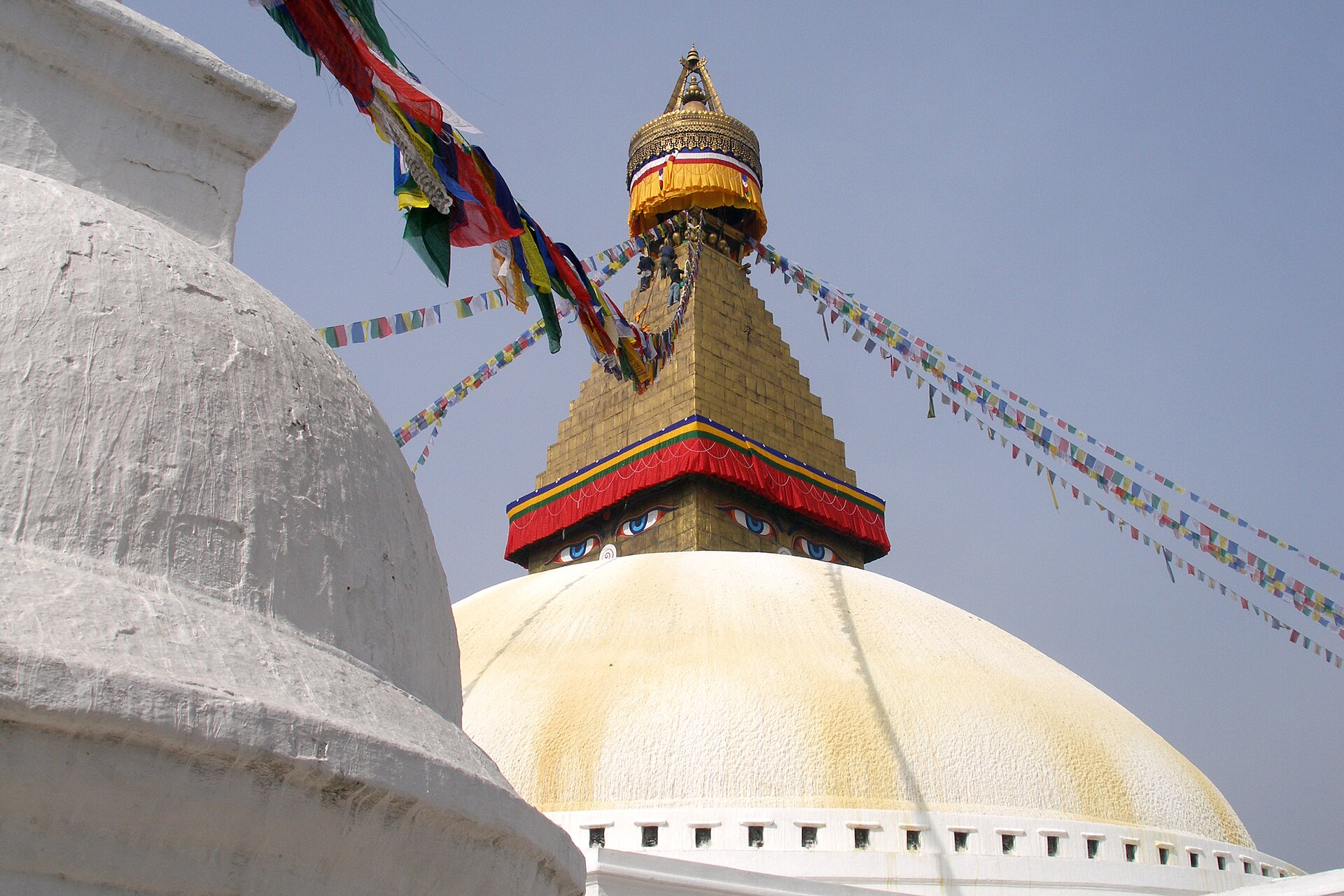
Boudhanath is the largest round stupa in Nepal, in the eastern part of Kathmandu. Its white dome is topped by a gold tower painted with a pair of watchful eyes, and strings of prayer flags run from the top to the ground. It’s the center of the Tibetan Buddhist community in Kathmandu, and it has been a World Heritage Site since 1979. Walk around it clockwise, as the worshippers do, and visit at dusk, when the lamps are lit.
Swayambhunath
On a hill on the western side of the valley, Swayambhunath is a stupa that’s sacred to Buddhists and also respected by Hindus. Nepali tradition says a lotus seed planted in the ancient lake bloomed here with a radiant light, and the stupa marks that spot. Visitors climb a long stairway, and monkeys live around the site, so keep food and loose items out of reach.
Pashupatinath
Pashupatinath is one of Nepal’s most important Shiva temples, on the banks of the Bagmati River in the east of the city. The temple complex covers about 240 hectares, with many shrines, ashrams and monuments, and it’s the oldest religious site in the Kathmandu Valley. It is also where Hindu cremations take place along the river, which is part of its daily life. Only Hindus may enter the main temple, but visitors can watch from the opposite bank, quietly and without photographing the funerals.
Durbar Squares
The old royal squares of Kathmandu, Patan and Bhaktapur are the best places to see Newar temple architecture, with pagoda roofs, carved wooden windows and courtyards. Each is a separate town with its own square, so a day in each gives a different picture of the same architecture. Many monuments here were damaged in the April 2015 earthquake, and restoration has continued for years, so some buildings may be under scaffolding. Ask locally what’s open.
When to go
The most dependable weather is in spring and autumn, when the skies are clear for mountain views. The monsoon, from about June to September, brings rain and clouds. Kathmandu is also the departure point for treks and mountain flights; see our guide to Everest National Park.
How long to stay
Two full days cover Boudhanath, Pashupatinath, Swayambhunath and one Durbar Square, and three days give you Patan and Bhaktapur as well. Many travelers combine Kathmandu with Bhutan or a trek. See our Nepal travel guides and Nepal tours for routes.
Planning Kathmandu with Absolute Asia Tours
Absolute Asia Tours has planned private trips in Asia since 1989. In Kathmandu that means a private guide who can explain the rituals at Pashupatinath and Boudhanath, a driver to manage the traffic, and a plan that puts the temples at the quiet hours. We’re rated 4.8 out of 5 across about 900 traveler reviews. Tell us your dates and we’ll plan from there.
Sources (read in Nepali): Nepali Wikipedia entries on the Kathmandu Valley, Pashupatinath, Swayambhunath and Boudhanath. Last checked November 2026.
Kathmandu: FAQ
Where is Kathmandu?
In central Nepal, in the Kathmandu Valley in the Himalayan foothills. It’s the capital of Nepal.
Which country is Kathmandu in?
Nepal, in South Asia.
How many days do you need in Kathmandu?
Two full days for the main temples and stupas, three if you add Patan and Bhaktapur.
What is Boudhanath?
The largest round stupa in Nepal, a center of Tibetan Buddhism and a World Heritage Site since 1979.
Can non-Hindus enter Pashupatinath?
Not the main temple, but the wider complex and the riverbank can be seen from outside.
When is the best time to visit Kathmandu?
Spring and autumn, for clear skies.
Photo: Vyacheslav Argenberg, Wikimedia Commons, CC BY 4.0.

The Private Difference
Tailor-Made Kathmandu, Nepal Journeys
Kathmandu, Nepal is best explored through a private tailor-made journey. Our local specialists craft bespoke itineraries with dedicated English-speaking certified guides and private chauffeured transfers.
Destination Quick Facts
| Ideal Duration | 2 to 3 nights (unhurried pacing) |
| Best Season | November to April (Optimal dry season) |
| Typical Budget | Customized to preferred luxury tier |
| Travel Style | 100% Private Chauffeured & Guided |
| Best For | Couples, Seniors & Multigen Families |
Our Favorite Journeys
Kathmandu, Nepal, at Its Best Right Now
We are composing new Kathmandu, Nepal itineraries right now. Tell us what you have in mind and a designer will build one around you.
When to Go

Start Planning
Ready to see Kathmandu, Nepal on your own terms?
Share a few details and a private travel designer will reach out within one business day.